Affordable Robotic & Automation: Democratizing Efficiency for Businesses
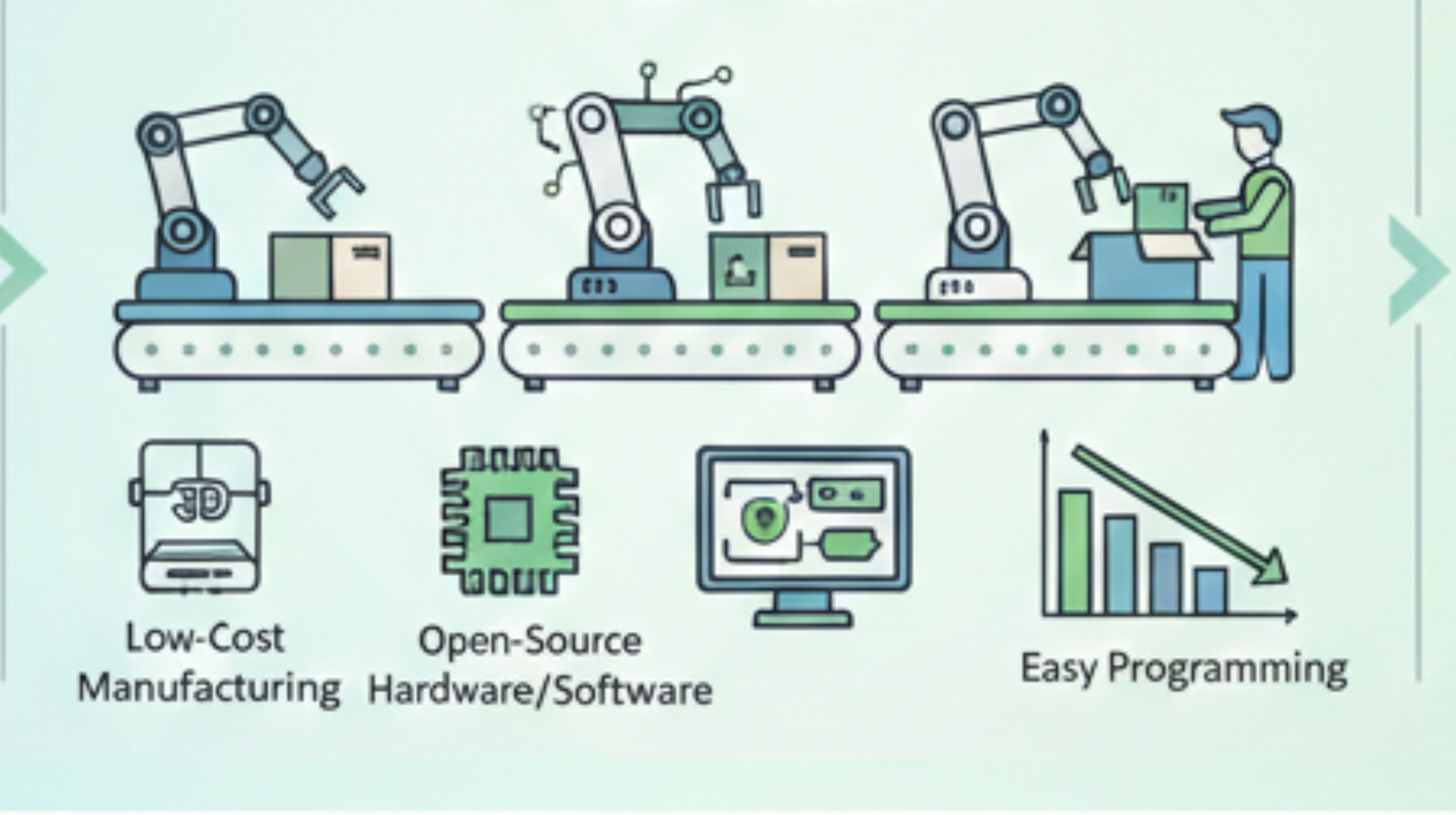
The conversation around affordable robotic & automation has fundamentally shifted in recent years. What was once the exclusive domain of large enterprises with immense capital budgets is now becoming accessible for businesses of virtually any size. This isn't just a trend; it's a necessary evolution for companies looking to maintain competitiveness and foster sustainable growth in a dynamic global market. The latest shift most people missed is how dramatically the total cost of ownership has decreased, making these technologies a viable investment rather than an unattainable luxury.
Many business leaders are now actively exploring how to leverage these powerful tools without breaking the bank, driven by pressures to optimize operations, enhance productivity, and address persistent labor shortages. Yet, missteps can be costly: choosing the wrong solution or failing to integrate it properly can lead to wasted investment, operational headaches, and a missed opportunity to truly transform their workflows. Understanding the nuances of achieving true affordability, beyond just the sticker price, is paramount for success.
What Defines Affordable Robotic & Automation Today?
Affordable robotic & automation refers to the deployment of automated systems and robots that provide a positive return on investment within a practical timeframe for small to medium-sized enterprises (SMEs) and even micro-businesses. This often involves solutions with lower upfront costs, simpler integration requirements, and a quicker learning curve compared to traditional, highly complex industrial systems.
It's not merely about cheap hardware; it encompasses a holistic approach to automation where the benefits clearly outweigh the total cost of ownership, including acquisition, implementation, maintenance, and training. From working with real businesses, it's clear that true affordability integrates seamlessly into existing operations, enhancing rather than disrupting them.
Affordable robotic & automation solutions are characterized by their accessibility, ease of deployment, and a clear, measurable return on investment, making advanced capabilities attainable for businesses of all scales. These systems minimize upfront capital expenditure and reduce operational complexities, enabling swift integration and rapid productivity gains.
The critical distinction lies in their modularity and user-friendliness. While traditional automation often demanded extensive custom engineering and dedicated programming expertise, today's affordable options increasingly feature intuitive interfaces, "no-code" or "low-code" programming, and plug-and-play components. This democratization allows companies to start small, automate specific pain points, and scale their efforts as needs evolve and budgets allow, rather than committing to an all-or-nothing overhaul.
The Technological Levers Driving Down Costs
Several significant advancements are making affordable robotic & automation a reality. These aren't just incremental improvements but foundational shifts in how these technologies are designed, manufactured, and deployed.
- Collaborative Robots (Cobots): Perhaps the most prominent driver, cobots are designed to work safely alongside humans without extensive safety caging. Their smaller footprint, lower weight, and built-in safety features drastically reduce installation costs and space requirements. Their ease of programming – often through "teach by demonstration" – minimizes the need for specialized robotics engineers.
- Modular Design and Standardization: Automation components are becoming increasingly standardized and modular. This means businesses can buy off-the-shelf parts and integrate them, rather than relying on expensive custom fabrication. This ecosystem of interoperable components drives down both purchase price and integration complexity.
- Advanced Sensor Technology: Cheaper, more powerful sensors (vision systems, force sensors, proximity sensors) enhance robot capabilities, allowing them to perform more complex tasks with greater precision and safety, often without requiring rigid, expensive fixturing. This translates to more versatile and cost-effective solutions.
- Cloud-Based Control and AI: Cloud platforms enable remote monitoring, predictive maintenance, and software updates, reducing the need for on-site IT infrastructure and specialized technicians. Artificial intelligence and machine learning are also making automation smarter, more adaptable, and easier to train, further reducing human intervention and associated costs.
- Robotic Process Automation (RPA): For administrative and IT tasks, RPA software bots are automating repetitive, rule-based digital processes. This software-based automation carries significantly lower hardware costs and can deliver rapid ROI by freeing human workers from tedious data entry, form processing, and system integration tasks.
What's starting to matter now is the convergence of these factors, creating a synergy that pushes affordability even further. This isn't just about robots getting cheaper; it's about the entire ecosystem supporting automation becoming more accessible.
Real-World Applications of Cost-Effective Automation
The applications for affordable robotic & automation are diverse and growing, touching various sectors beyond traditional manufacturing. These solutions are proving their worth in scenarios where precision, repetition, and consistency are key, but large-scale investment is not feasible.
Manufacturing and Assembly
In smaller workshops and factories, cobots are handling tasks like machine tending (loading/unloading CNC machines), welding, gluing, and pick-and-place operations. Their ability to work alongside humans makes them ideal for tasks that are too repetitive or ergonomically challenging for human workers but don't require full-scale, caged automation. For instance, a small metal fabrication shop might use a cobot to load parts into a press brake, improving consistency and reducing worker fatigue.
Logistics and Warehousing
Automated Guided Vehicles (AGVs) and Autonomous Mobile Robots (AMRs) are becoming more common in smaller warehouses and distribution centers. Unlike traditional AGVs that require magnetic strips or wires, modern AMRs use sophisticated navigation to move goods independently. They can transport items, assist with order fulfillment, and streamline inventory management, reducing manual labor and speeding up throughput without requiring extensive infrastructure overhauls.
Retail and Hospitality
Beyond the factory floor, affordable automation is making inroads. In retail, inventory management robots can scan shelves, track stock levels, and identify misplaced items, freeing up human staff for customer service. In hospitality, simple automation can handle tasks like cleaning, delivery of goods to rooms, or even basic food preparation, addressing labor shortages and improving efficiency. Based on how platforms behave today, these sectors are seeing increased adoption due to pressure on labor costs and customer experience expectations.
Service Industries and Back-Office Operations
Robotic Process Automation (RPA) is a game-changer for service industries. Accounting firms use RPA to automate invoice processing, reconciliation, and report generation. Healthcare providers employ it for appointment scheduling, patient data entry, and claims processing. Any office environment with high volumes of repetitive, rule-based digital tasks can benefit significantly from RPA, often with an ROI realized within months.
Avoiding Common Pitfalls in Affordable Automation
While the promise of affordable robotic & automation is compelling, businesses often stumble into common traps that can negate the cost savings or even lead to failed deployments. Avoiding these missteps is crucial for successful implementation.
Over-Automating Simple Processes
One frequent mistake is automating a process that is fundamentally inefficient or unnecessary. Before deploying any automation, it's vital to critically analyze and optimize the underlying process. Automating a broken process only makes it broken faster. Companies should first simplify, standardize, and streamline their workflows manually, then introduce automation to the refined process.
Neglecting the Human Element
Automation isn't just about machines; it's about how humans interact with those machines. Failing to involve employees in the planning and implementation stages can lead to resistance, fear, and a lack of adoption. Training, upskilling, and clearly communicating how automation will augment human work, rather than replace it entirely, are essential. A successful deployment considers the human-robot collaboration aspect from day one.
Ignoring Total Cost of Ownership (TCO)
Focusing solely on the purchase price of a robot or software license is a critical error. The true cost includes integration, necessary infrastructure modifications, training, ongoing maintenance, software updates, and potential downtime. A seemingly cheaper solution upfront can become very expensive if it's difficult to integrate, requires constant maintenance, or has a steep learning curve for your team. From working with real businesses, hidden costs often derail initial budget projections.
Poor Planning and Lack of Clear Objectives
Jumping into automation without a clear strategy or defined goals is a recipe for failure. Businesses need to identify specific pain points, establish measurable objectives (e.g., "reduce cycle time by X%," "increase output by Y%," "reduce errors by Z%"), and have a phased implementation plan. A common misconception is that automation is a magic bullet; it's a tool that requires strategic application.
Underestimating Integration Challenges
Even "affordable" systems still need to integrate with existing infrastructure, IT systems, and operational workflows. Data exchange, network compatibility, and physical space constraints can pose significant challenges. It's easy to assume new tech will just "fit in," but often, careful planning for how new automation will communicate with legacy systems and existing equipment is overlooked, leading to unexpected costs and delays.
Best Practices for Implementing Affordable Robotic & Automation
Successfully integrating affordable robotic & automation requires a strategic approach. These best practices are designed to maximize your investment and ensure a smooth transition, leading to tangible benefits.
1. Start Small, Think Big, Scale Fast
Instead of attempting a large-scale, complex automation project initially, identify a single, high-impact, repetitive task that can be easily automated. This "proof of concept" approach minimizes risk, demonstrates value quickly, and allows your team to gain experience. Once successful, you can iteratively expand to other areas. This modular strategy is a key enabler of true affordability.
2. Prioritize Process Optimization First
Before automating anything, thoroughly analyze and optimize your existing processes. Eliminate waste, simplify steps, and standardize procedures. Automation should enhance an already efficient process, not just automate inefficiencies. This lean approach ensures that your investment yields maximum returns and avoids perpetuating existing problems.
3. Engage Your Workforce Early and Often
Foster a culture of collaboration by involving employees from the outset. Educate them on the benefits of automation, address concerns about job displacement, and highlight opportunities for upskilling into higher-value roles, such as robot operators, programmers, or maintenance technicians. Empowering your team to be part of the solution is crucial for acceptance and long-term success.
4. Focus on Total Cost of Ownership (TCO), Not Just Purchase Price
When evaluating solutions, look beyond the initial capital outlay. Factor in integration costs, necessary safety measures, training expenses, energy consumption, maintenance, and potential downtime. A slightly more expensive system with easier integration, lower maintenance, and better support can often be more affordable in the long run. After analyzing recent patterns, vendors offering comprehensive support packages often provide better TCO.
5. Seek Solutions with Open Architectures and Interoperability
Choose systems that can easily integrate with your existing equipment and software. Open platforms and standard communication protocols (like OPC-UA or Modbus) offer greater flexibility and reduce vendor lock-in. This ensures that your initial investment can be expanded upon and adapted as your business grows and technology evolves.
6. Leverage Government Programs and Incentives
Many governments and regional bodies offer incentives, grants, or tax credits for businesses investing in automation and digital transformation. Researching and applying for these programs can significantly offset the initial costs, making projects even more affordable and accessible.
The Evolving Landscape of Accessible Automation
The trajectory for affordable robotic & automation is one of continued growth and increasing sophistication, all while maintaining a strong focus on accessibility. We're seeing a rapid convergence of technologies that will further democratize these tools for businesses of all scales.
Over the next 30-90 days and beyond, expect to see even greater emphasis on AI-driven automation that learns and adapts with minimal human intervention. This will manifest in "smarter" cobots that can handle more complex, variable tasks, and RPA solutions that leverage machine learning for enhanced decision-making in unstructured data environments. The user experience for programming and operating these systems will continue to improve, moving closer to true "no-code" interfaces that even non-technical staff can manage.
Furthermore, the subscription economy is influencing automation, with "Robotics-as-a-Service" (RaaS) models becoming more prevalent. This allows businesses to pay for automation capabilities on an operational expenditure (OpEx) basis rather than a large capital expenditure (CapEx), making the entry barrier even lower. This model shifts the burden of maintenance and upgrades to the service provider, allowing companies to focus on their core business. The latest shift most people missed is how quickly these flexible financing models are making advanced solutions viable for smaller players.
Supply chain resilience and localized production will continue to drive demand for nimble, cost-effective automation, particularly in regions facing labor shortages. The ability to quickly deploy and redeploy adaptable automation solutions will be a critical competitive advantage. The conversation will move beyond just cost reduction to focusing on agility, quality, and responsiveness as direct outcomes of strategic automation.
In conclusion, the era of truly affordable robotic & automation is not just on the horizon; it is here. Businesses no longer need to fear the prohibitive costs or complexity traditionally associated with these technologies. By focusing on strategic implementation, optimizing processes, and embracing a holistic view of total cost of ownership, companies can unlock unprecedented levels of efficiency, productivity, and resilience, ensuring they remain competitive in an increasingly automated world. The tools are ready; the time for strategic adoption is now.


Comments
Post a Comment