how to monitor compressor pump energy data on cloud platform 2026
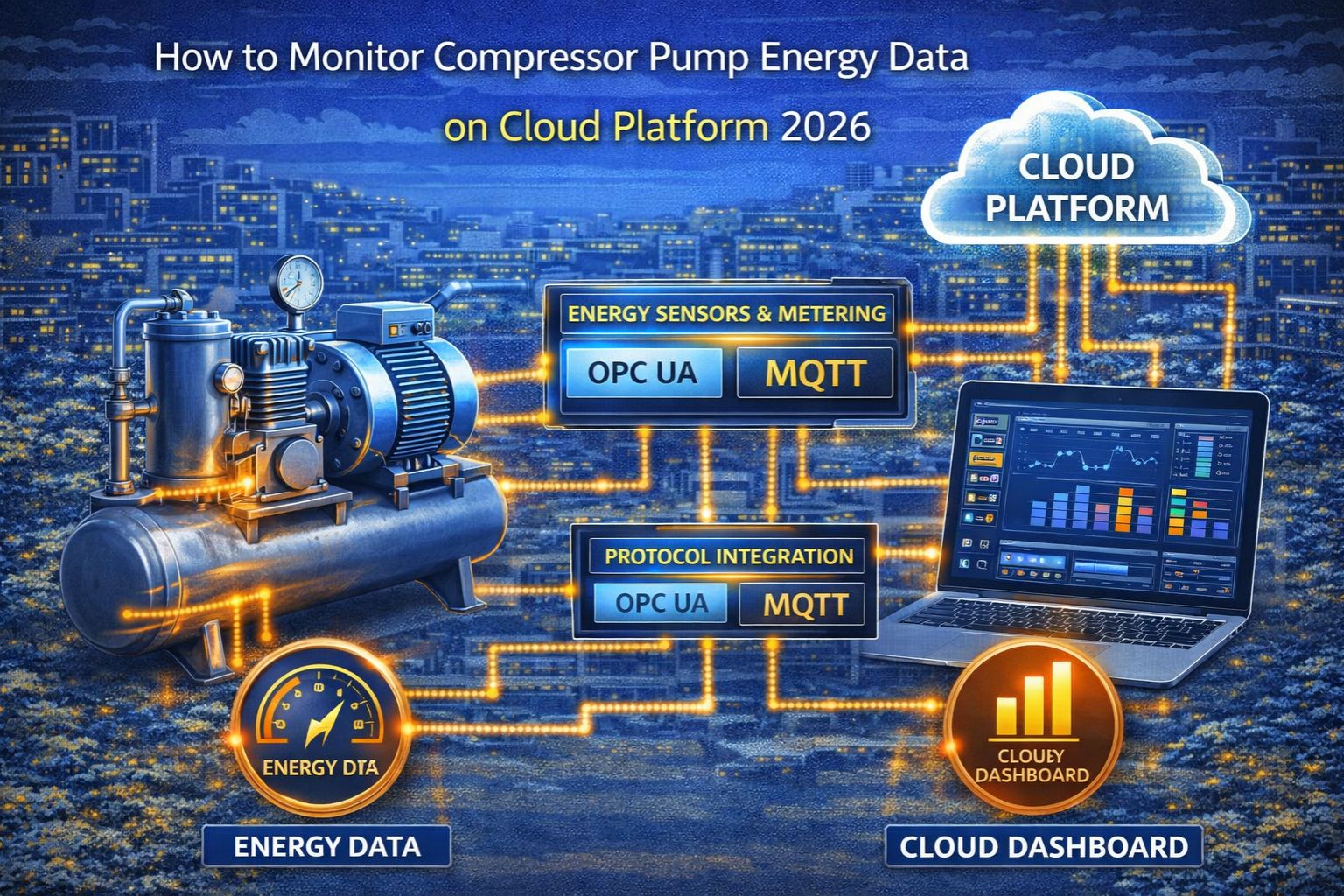
how to monitor compressor pump energy data on cloud platform 2026
So you want to monitor compressor pump energy data on a cloud platform in 2026. In theory, it's about connecting old meters and sensors through IoT gateways to a dashboard. But in practice, it's where protocol mismatches and data buffering at the edge create these silent gaps. You end up with real-time energy analytics you just can't trust.
The Real Meaning of Cloud Energy Monitoring Today
Forget the dashboard for a second. The real task is making sure the data pipeline holds up—from those Modbus or BACnet meters, through translators, to your cloud's ingestion point. And honestly, the most common failure isn't in the cloud. It's the gateway struggling with poll-response timeouts when the network gets shaky.
What Actually Happens at Industrial Scale
One pump is manageable. Scale up to a whole plant floor, and serial polling creates this cumulative latency. Gateways buffer readings to cope, but during peak compressor cycles? That buffer can overflow. Or it timestamps data wrong. Suddenly, you're sending batched energy readings to the cloud with delays that wreck any chance of real-time alerts or accurate cost tracking.
The Critical Mistake in Data Pipeline Design
Here's the wrong assumption everyone makes: that data reaching the cloud means the problem's solved. Teams often ignore the jitter and packet loss in the cellular or satellite backhaul from remote sites. The cloud platform just sees 'missing data' and fills in the blanks with automated interpolation. It paints a picture of compressor efficiency and energy spikes that's dangerously smooth, and dangerously wrong.
When to Tune, Reconfigure, or Redesign
If latency is under 5 seconds and data loss is just sporadic, you can probably just tune the polling intervals. If your time-series data shows consistent gaps or messed-up timestamps, you need to reconfigure the gateway's protocol stack and cloud ingestion rules. But when you've got mixed-vendor pumps and meters, and internal fixes can't reconcile the data? That's when you need a full pipeline redesign, likely involving a dedicated protocol translation layer. It's at that boundary where snipcol solutions tend to come into the conversation.
FAQ
-
Question: What is the first thing to check when cloud energy data looks wrong?
-
Answer: Don't start with the cloud dashboard. Check the gateway logs for Modbus exception codes or BACnet timeouts. The error usually happens in the protocol handshake, long before the data is ever transmitted.
-
Question: Why do we see energy usage spikes at midnight on the cloud report?
-
Answer: That's almost always a timestamping error. The gateway recovers from a network outage, dumps hours of cached readings, and stamps them all with the sync time instead of the actual meter read time. It's a classic protocol translation flaw.
-
Question: Can we trust cloud platform AI to fix missing compressor data?
-
Answer: No. Cloud AI interpolates based on patterns, not physical reality. It can't tell if a compressor shut down or a sensor failed. You'll get false efficiency calculations. You have to fix the data at the source.
-
Question: When is it too late to fix this with our internal IT team?
-
Answer: When you have multiple compressor models from different OEMs, each with its own proprietary energy registers, and your team spends more time building custom parsers than analyzing data. The core issue is a protocol-level data model mismatch. That's when you need outside expertise.


Comments
Post a Comment