paint spray robot data to cloud quality traceability system 2026
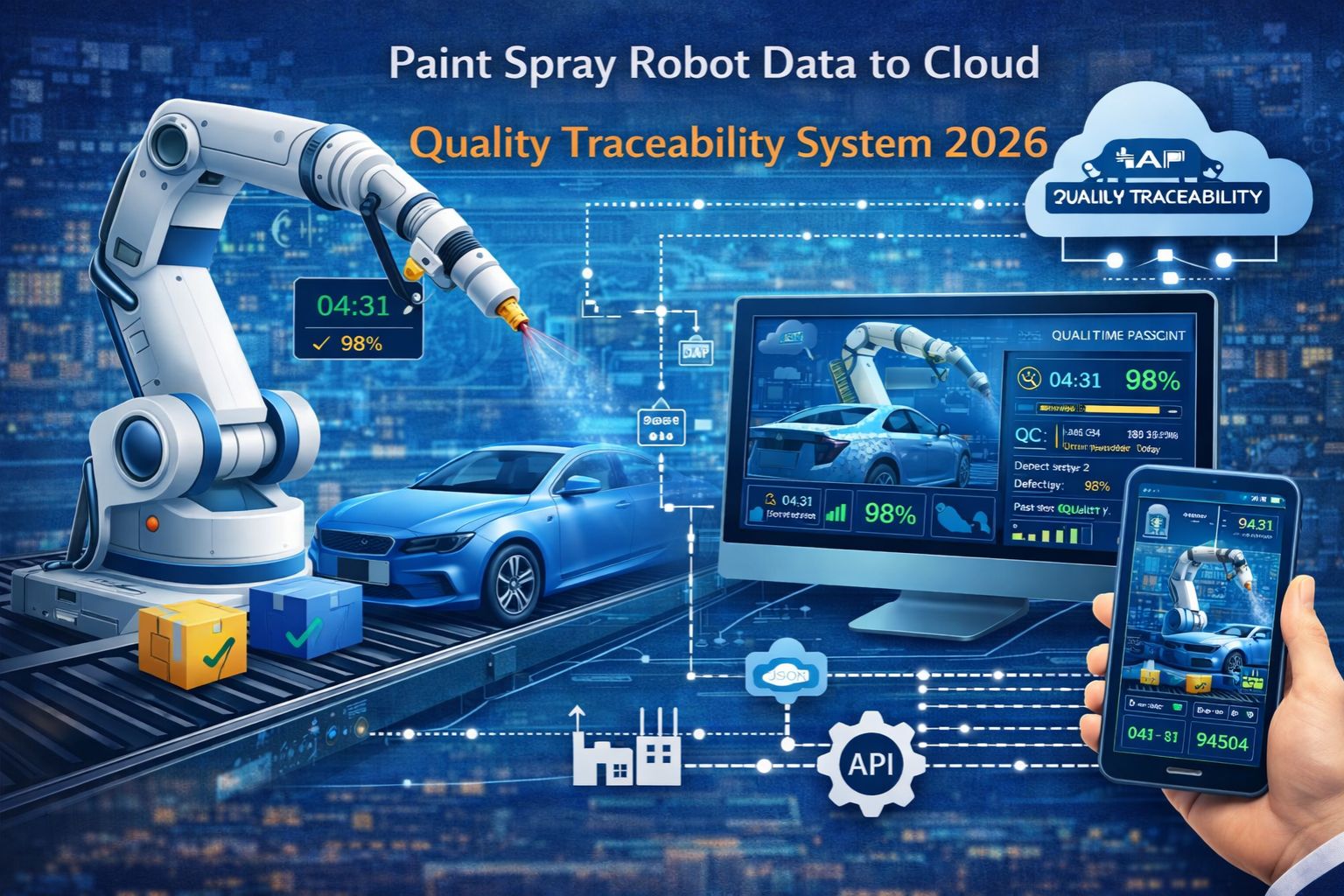
paint spray robot data to cloud quality traceability system 2026
Getting real-time data from industrial paint spray robots into a cloud-based quality traceability system by 2026... it's not just a data pipeline. It's a high-stakes integration where, frankly, milliseconds of protocol latency can snap the chain of quality evidence. That can leave an entire traceability system useless, both legally and on the shop floor. The real failure point usually isn't the robot or the cloud itself. It's that messy translation of industrial protocols and trying to keep data context intact as it crosses the IT/OT divide.
The Real Meaning of Robot-to-Cloud Traceability
In a live paint shop—think automotive or aerospace—traceability has to mean every single spray parameter gets locked down. Fluid pressure, fan width, robot path deviation, even ambient humidity. It all needs a precise timestamp, its context preserved, and made immutable from the robot controller all the way to the final quality record. This goes way beyond simple logging. You're building a forensic-quality data chain. And here's the thing: one missing context packet for a single car door? That can potentially invalidate certification for a whole production batch. That risk gets a lot worse when you're dealing with legacy robot controllers that were never meant to talk to cloud-native systems.
What Breaks at Scale in 2026 Operations
When you ramp up to full production scale, the system tends to fail at the gateway. Robot controllers using protocols like PROFINET or EtherNet/IP send data in tight, cyclic bursts—it's deterministic. But cloud ingestion is built for asynchronous, packetized flows. So the gateway's buffer memory just fills up during peak spray cycles, and packets get dropped. What teams often miss is this: it's usually not the big parameter values that vanish first. It's those tiny, critical sequence and context tags that link everything together. That's what creates untraceable gaps in the quality record. And you might not even see those gaps until a regulatory audit or a major warranty claim investigation happens.
The Critical Mistake in Assuming Compatibility
The most common—and destabilizing—misunderstanding is treating the robot data as just a simple "feed." Every robot manufacturer's data structure has its own proprietary flags and status bits tucked inside standard protocol frames. If you use a generic OPC UA or MQTT bridge that doesn't decode these manufacturer-specific contexts, it'll pass along the numbers but strip out the essential quality metadata. The result? A cloud system full of data you can't definitively trace back to a specific robot, program, or paint batch. That defeats the whole point of the IT/OT integration investment.
When to Tune, Reconfigure, or Redesign the Bridge
The decision line is pretty clear. If your data gaps are sporadic and tied to network congestion, you can probably get by tuning buffer sizes and QoS settings. If the gaps are consistent and match up with specific robot programs or data types, then you need to reconfigure the protocol translation layer to preserve that native data context. But when the traceability requirement is absolute, and the legacy robot protocol just can't guarantee context preservation at the needed speed, internal fixes won't cut it. That's when you have to redesign the data bridge with a deterministic, context-aware engine—something that acts as a universal protocol service, not just a simple translator. This is the kind of scenario where a platform like snipcol shifts from being a useful tool to a contextual necessity for maintaining a certifiable data lineage.
FAQ
Question: What is the biggest risk when sending paint robot data to the cloud?
Answer: Honestly, the biggest risk is losing the data *context*, not the raw data itself. If you lose the precise timestamps, sequence numbers, and equipment-state flags from the robot controller, the cloud data becomes useless for definitive quality traceability. That's a major liability in regulated industries.
Question: Why do paint robot and cloud system protocols conflict?
Answer: They're built on fundamentally different models. Robot protocols are cyclic and deterministic—they're for real-time control. Cloud APIs are asynchronous and packet-based, built for scalability. The translation layer has to reconcile these two worlds without dropping the contextual metadata, which is the whole key to traceability.
Question: Can we just use a standard IoT gateway for this integration?
Answer: For basic monitoring, maybe. But for certified quality traceability? No. Standard gateways often treat the data as a generic payload. They strip out the manufacturer-specific context and status bits embedded in the robot's own protocol—the very data you often need legally for a complete quality record.
Question: How do we know if our current integration is failing silently?
Answer: You have to audit the data lineage. If you can't reconstruct the exact set of robot parameters and environmental conditions for *any* single painted component from your cloud records, you've got silent traceability failures. Figuring that out usually requires a protocol health audit that focuses on context preservation, not just whether the connection is live.


Comments
Post a Comment