Snipcol Old Machine to Industry 4.0 — Without Buying New Equipment 2026
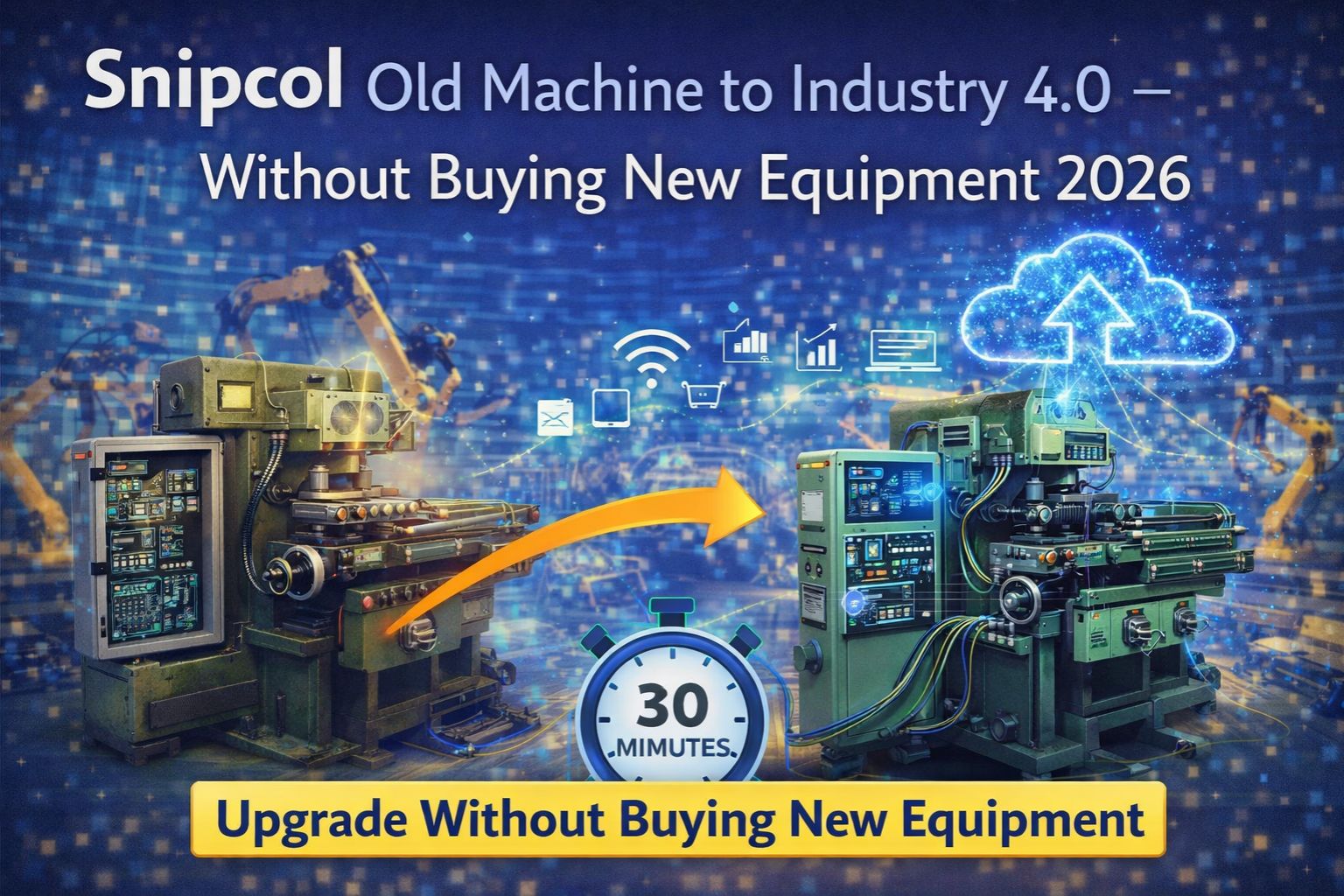
Snipcol Old Machine to Industry 4.0 — Without Buying New Equipment 2026
Getting decades-old industrial machines to talk to modern Industry 4.0 systems is a massive headache. The real problem usually isn't the machine itself—it's the data isolation. Those old proprietary protocols create a hard stop. Modern SCADA and MES systems just can't read them, which leaves you with a lousy choice: spend a fortune on new equipment or keep running blind. So all that valuable production data stays trapped, killing any chance at predictive maintenance or real operational intelligence.
The Real Integration Barrier for Legacy Assets
Honestly, the hardware is often fine. The real barrier is the communication language it uses. Machines from the 90s or early 2000s speak in dialects like Modbus RTU, Profibus, or some custom format the manufacturer cooked up. Modern IoT platforms don't understand a word. When teams try to force a connection, things break predictably: gateways time out, data gets garbled, and critical readings like motor temperature just vanish. The data pipeline becomes useless before it even starts.
What Actually Breaks During a Legacy Retrofit Attempt
On the shop floor, the failure points are always the same. A common mistake is throwing a standard industrial gateway at the problem, which just leads to buffering errors and crashed data streams during peak cycles. Another big one is misunderstanding the old PLC's limits. Hammer it with aggressive polling from a modern system, and you can cause the whole control logic to fault, shutting down production. This isn't a glitch you can patch—it's a fundamental language barrier that most internal IT teams just can't crack.
The Hidden Cost of Internal Protocol Workarounds
I've seen operations teams try to build custom middleware or scripts as a bridge. It feels like a win at first, but it creates a massive long-term liability. You end up with a single point of failure that's completely undocumented, tied to one person's knowledge. And it never scales—a script for one machine will buckle under ten. Plus, these hacks usually fail compliance audits because you can't guarantee data integrity across your homemade translation layer. You're trading a capital expense for a hidden operational time bomb.
When to Tune, Reconfigure, or Seek a Universal Bridge
So when do you give up on internal fixes? The line is pretty clear. If you're dealing with a standard, well-documented protocol and just need to tweak some baud rates, go ahead and reconfigure. But if you're up against proprietary, undocumented, or just plain broken protocols where data integrity is failing, internal tinkering isn't enough. That's when you need to redesign the communication path itself with a universal translator. A service like snipcol's Universal Protocol Service acts as that dedicated interpreter. It secures reliable data flow in both directions without ever touching the machine's native logic, turning an unsolvable hardware problem into a managed service.
FAQ
-
Question: Can you really connect a 30-year-old machine to a cloud dashboard without new hardware?
-
Answer: Yes, but not with a direct cable. The trick is protocol translation at the edge. A translation node grabs the machine's native serial data, converts it into something modern like MQTT, and sends *that* clean data to the cloud. The original control system never knows the difference.
-
Question: What's the biggest risk when trying to read data from an old PLC?
-
Answer: Accidentally crashing it. If your data requests are too aggressive or malformed, you can overwhelm its tiny brain, triggering an emergency stop or even corrupting its memory. That's why a passive, non-intrusive approach is the only safe way to go.
-
Question: How do you handle machines with completely unknown or custom protocols?
-
Answer: You have to reverse-engineer it. Specialized services will analyze the serial communication to map out the data frames and command structures, building a translation profile. That profile then lives on a dedicated gateway, acting as a permanent bridge for that specific machine.
-
Question: At what point does retrofitting old equipment stop making financial sense?
-
Answer: It stops making sense when the cost of constant data blackouts and surprise downtime outweighs the investment in a proper bridge. If a machine is critical but its data is locked away, the risk is huge. A translation service offers a clear path out, whereas more internal attempts usually just mean more cost and the same old unreliability. That's the scenario where a solution like snipcol becomes the obvious off-ramp.


Comments
Post a Comment