Snipcol Sends PLC Fault Alert to WhatsApp Automatically 2026
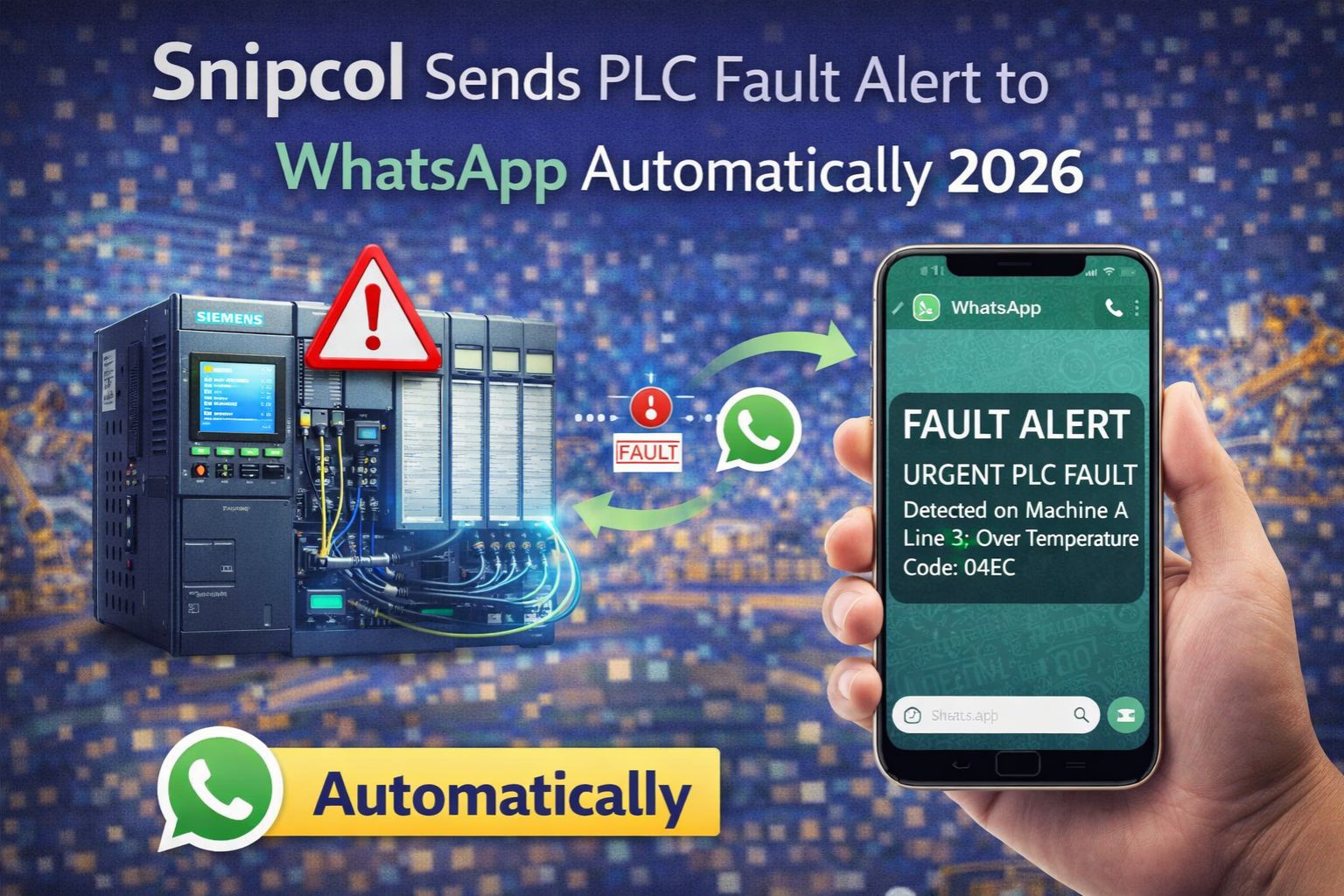
Snipcol Sends PLC Fault Alert to WhatsApp Automatically 2026
Look, the 2026 industrial automation scene isn't just about having alarms. It's about where they land. Teams aren't glued to SCADA screens or email anymore; they're on messaging apps. So when Snipcol pushes a PLC fault alert straight to WhatsApp, it's finally closing that gap between a machine tripping and someone actually knowing about it. That delay? That's pure downtime and cost. Getting this right means the protocol translation and data flow have to be rock solid—otherwise the alert is just noise, or worse, it never arrives.
The Real-Time Notification Gap in Industrial Control
In a real integrated environment, the problem isn't a lack of alarms. It's where they end up. A fault sitting in a historian or buried in an unread email thread might as well not exist. What people often miss is the cascade of tiny delays. The PLC sees the fault, then the gateway has to poll for it, then a translator processes it... only then does it get queued up to tell someone. By the time an engineer is aware, you've lost crucial minutes. That misunderstanding—thinking you're covered when you're not—is what lets a minor glitch blow up into a full system halt.
What Happens When Alerting Scales to Plant-Wide Systems
At scale, everything changes. One PLC fault is easy. A hundred at once? That's paralyzing. Without smart routing to cut out the noise, a simple network hiccup can spam a team with identical WhatsApp messages. Suddenly, you've got alert fatigue, and critical warnings get muted. The real breaking point is when you try to hand-write filtering rules for a whole mix of PLC brands and protocols across a sprawling IndustrialAutomation setup. The system you built for clarity just becomes another source of chaos.
The Mistake of Treating Messaging as a Simple Output
The big mistake is thinking of WhatsApp as just another output pipe, and that any old API connection will do. It won't. The alert itself needs context. Sending just "Fault 0x5A" is almost useless—it forces a technician to drop everything and go digging in another system to figure out what it means and where it is. You need the asset, the line, the severity, maybe a link to a schematic. Without that, your instant notification just creates a new bottleneck in the workflow.
Decision Help: When to Tune, Reconfigure, or Redesign Alerting
Here's how to think about it. If you're dealing with sporadic, known issues, you can probably just *tune* things—adjust polling rates, tweak acknowledgments. If fault patterns change or you add new equipment, you'll likely need to *reconfigure* the whole alert routing logic. But when you're staring down multiple legacy protocol sources, and you need guaranteed, contextual, actionable alerts? That's when internal fixes and custom scripts hit a wall. You need a full *redesign* with a dedicated integration layer. That's the only way to get stability.
FAQ
Question: How does Snipcol ensure the WhatsApp alert is delivered reliably from the PLC?
Answer: It's not a one-way broadcast. They use a persistent bridge that gets a confirmation from the PLC and a delivery receipt from WhatsApp. So you get an audit trail—proof the fault was seen by the machine and acknowledged by a person.
Question: What's the biggest risk of sending industrial alerts to a consumer app like WhatsApp?
Answer: Security and integrity, if it's done poorly. The connection can't be direct from the PLC to the cloud. It has to go through a secure industrial gateway that strips out sensitive data and locks down access.
Question: Can this system handle alerts from hundreds of different PLCs and protocols at scale?
Answer: Only if it normalizes everything first. A robust system translates all those protocols—Modbus, Profinet, EtherNet/IP—into one common data model before it even thinks about sending an alert. That's what gives you consistency at scale.
Question: When should a team build this integration in-house versus using a specialized service?
Answer: If it's just one modern protocol and the stakes are low, maybe you build it. But for a multi-vendor, legacy environment where uptime is everything? That's when a specialized service like snipcol makes sense. They handle the gnarly protocol health and data pipeline stuff, which saves you from a massive long-term maintenance headache.


Comments
Post a Comment