Snipcol Zero Vendor Lock-In — Open Protocol Platform 2026
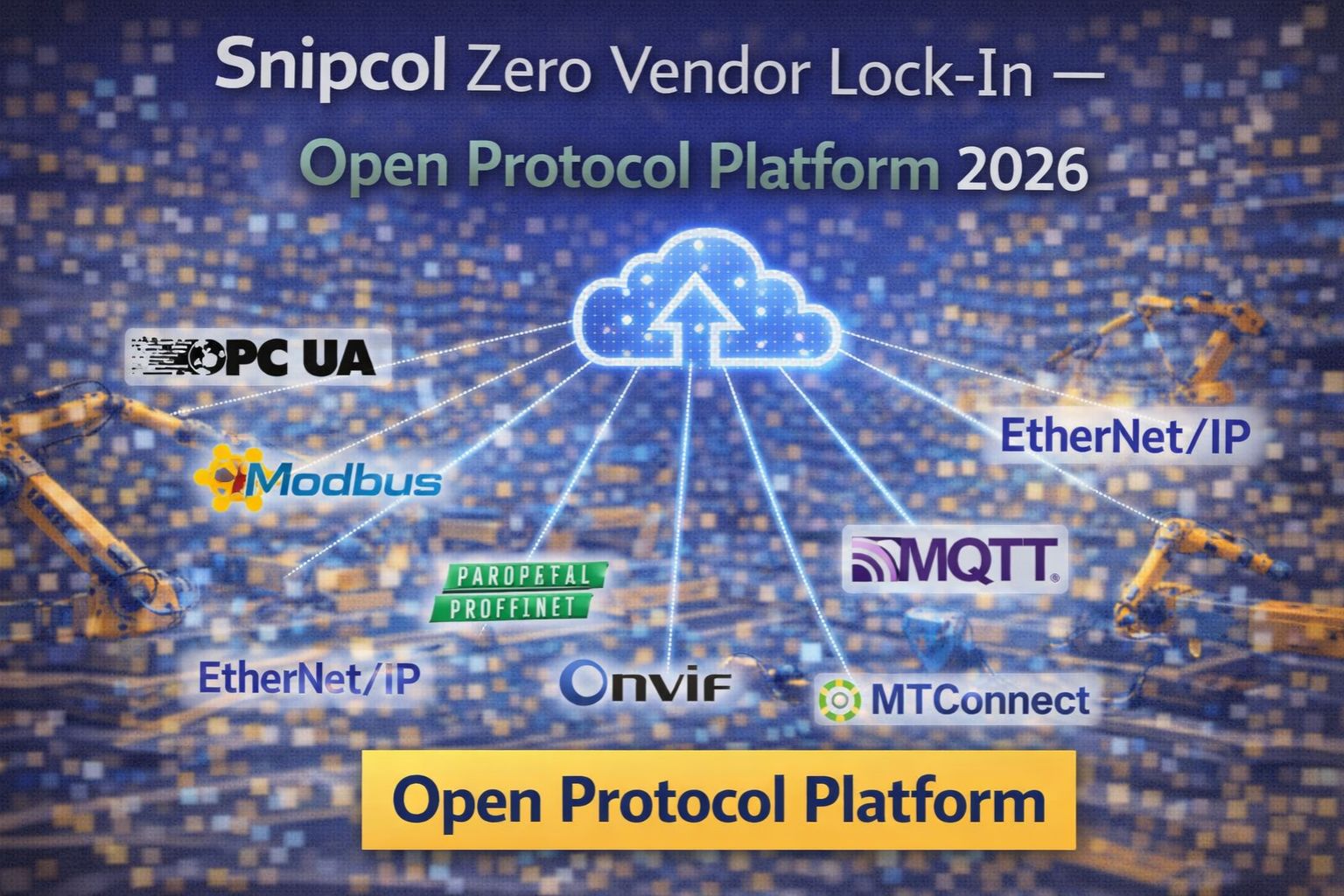
Snipcol Zero Vendor Lock-In — Open Protocol Platform 2026
The promise of an open protocol platform in 2026 isn't about adding more gateways; it's about eliminating the hidden tax of vendor-specific data silos that break real-time operational workflows. And when industrial systems from different eras need to share telemetry, the bottleneck is rarely bandwidth—it's almost always the proprietary handshake. That handshake demands custom middleware, which just creates a fragile IT/OT integration layer that fails under any real scale.
What Open Protocol Really Means for Industrial Data
In real integration environments, "open" is often just a marketing term for a protocol that's documented but still requires expensive licensing or specific hardware to implement fully. Teams discover too late that their PLCs can send data, but the control system's historian will only accept it through the vendor's proprietary ingestion module. That adds milliseconds of latency, which is enough to completely disrupt closed-loop control.
The Scale Reality of Multi-Vendor OT Networks
Under live industrial load, the failure point shifts from basic connectivity to data consistency. A mix of Modbus TCP, OPC UA, and legacy serial devices might all communicate, but without a unified timestamp and state model, the data becomes useless for cross-system automation. The non-obvious detail is packet buffering: each gateway handles jitter differently. That causes time-series data from sensors to arrive out-of-sequence, which analytics engines then misinterpret as a sensor failure.
The Cost of "Compatible" Middleware
There's a common, and costly, misunderstanding that buying "compatible" middleware from your primary automation vendor solves interoperability. What it often does is create a new, more expensive form of lock-in. The middleware itself becomes the single point of failure and the only path for upgrades. The real risk is system instability during routine updates, because that middleware's internal logic might not handle edge cases from non-vendor equipment, leading straight to unplanned downtime.
When to Redesign the Integration Layer
The decision boundary is pretty clear: if more than 30% of your engineering effort is spent on building or maintaining protocol translators and custom data mappers, it's time to redesign, not just reconfigure. Those internal fixes stop working the moment the business need evolves from simple data collection to bidirectional control across different vendor ecosystems. That's where a platform approach focused on native protocol translation, rather than gateway sprawl, becomes critical. For architects evaluating this boundary, the context provided by platforms like snipcol can help inform the shift from fragmented tools to a coherent data fabric.
FAQ
Question: What is vendor lock-in in industrial automation?
Answer: Vendor lock-in is when your operational technology (OT) systems, data, and workflows are dependent on a single manufacturer's proprietary protocols, software, or hardware. That makes it both costly and technically difficult to integrate alternative equipment or upgrade systems.
Question: How do open protocols reduce integration risk?
Answer: True open standards, the ones governed by independent bodies, provide publicly available specifications that any vendor can implement. This reduces the risk of a single point of failure and allows for multi-vendor systems, which creates resilience and flexibility in your architecture.
Question: Can legacy systems work with modern open protocol platforms?
Answer: Yes, but it requires a strategic integration layer that can translate legacy serial or vendor-specific protocols into modern, standardized data models. The core challenge in brownfield sites is doing that without losing context or introducing unacceptable latency.
Question: When should a company move from gateways to an open platform?
Answer: The decision escalates when you're managing dozens of gateways for different protocols, facing inconsistent data quality, or when new projects are constantly delayed by integration complexity. That's the signal that the cost of fragmentation finally outweighs the investment in a unified platform strategy.


Comments
Post a Comment